Materials — what our stickers are made of
Before you pick a film, print technology and laminate in the configurator, see how they differ: what they withstand, where they work best, and what not to expect from them.
Which material should you choose?
Eco-solvent print
- What it is
- The default print technology for our stickers — CMYK ink is absorbed into the film and comes with laminate protection by default.
- Where to use it
- The most common, recommended choice for stickers on white film: labels, business stickers, packaging — whenever you don't need a white underprint beneath the colors.
- What to avoid
- On transparent film: without a white underprint, colors come out translucent and dull — and eco-solvent has no white underprint option, so UV print is the better choice there.
- How we handle it
- We print and finish in-house — you send the file, we prepare a proof for your approval before printing.
- Durability
- With laminate the sticker is protected from sun and scratches; without it, it's cheaper but less durable — fine for shorter campaigns or indoor use.
UV print
- What it is
- CMYK ink cured with UV light, with an optional white underprint and a clear UV varnish.
- Where to use it
- Needed whenever you print on transparent, holographic, gold or silver film — the white underprint makes colors opaque and vivid.
- What to avoid
- If you're only printing on white film with no extras, eco-solvent is the simpler, default-recommended choice.
- How we handle it
- We set the white underprint and varnish together with you in the configurator — printing and finishing happen in-house.
- Durability
- UV varnish adds extra scratch protection; full sun and water resistance comes from the laminate (see “Laminate”).
White vinyl film
- What it is
- An opaque white self-adhesive vinyl (Orafol ORAJET 3164) — the base film for eco-solvent and UV-printed stickers.
- Where to use it
- Jar and cosmetics labels, logo stickers, candle labels — anywhere colors need to stay solid and consistent regardless of the surface underneath.
- What to avoid
- When you want a “printed straight on glass or metal” look with no visible white backing — pick the transparent film instead.
- How we handle it
- Apply to a dry, grease-free surface; the film manufacturer recommends applying above +10°C.
- Durability
- With laminate it's protected from sun and scratches (see “Laminate”); the unprinted film itself withstands up to 4 years of vertical outdoor exposure in a Central European climate.
Transparent vinyl film
- What it is
- A transparent self-adhesive vinyl — the same Orafol ORAJET 3164 line, in its transparent variant.
- Where to use it
- Jar and bottle labels when you want the “no-label” look, wedding stickers for alcohol and gifts, transparent logo elements.
- What to avoid
- Without a white underprint, colors on transparent film come out translucent and dull — and the white underprint is only available with UV printing, not eco-solvent.
- How we handle it
- Apply to a dry, grease-free surface; the film manufacturer recommends applying above +10°C.
- Durability
- With laminate it's protected from sun and scratches (see “Laminate”); the unprinted film itself withstands up to 4 years of vertical outdoor exposure in a Central European climate.
Laminate (matte / gloss)
- What it is
- A clear protective film (laminate) applied over the print — it protects against scratches, water and UV radiation. Available in matte or gloss, at the same price.
- Where to use it
- Stickers on packaging that travels, labels exposed to sun and moisture, anything that gets touched and rubbed — the laminate takes it instead.
- What to avoid
- For short campaigns or indoor use where price matters more than durability — without laminate the sticker is cheaper, though less resistant to scratches and UV.
- How we handle it
- We apply it during production — nothing extra needed from you, just pick matte or gloss.
- Durability
- Extends the print's life in the sun and under friction — a laminated sticker handles daily use and transport better than one without it. Outdoors the laminate sets the limit: about 2 years in a Central European climate (the film itself lasts longer).
Gold (roll print)
- What it is
- A gold-gloss metallized polyester film (Oracal 352) — for roll labels, supplied by Lambda.
- Where to use it
- Wedding monograms and thank-yous, premium candle and cosmetics labels — wherever a metallic shine matters.
- What to avoid
- This is a solid metallic color, not full CMYK — for multi-color, photographic designs, UV or eco-solvent print on white film works better.
- How we handle it
- Available in the “Roll stickers” category — you pick the gold print while configuring the label.
- Durability
- The film manufacturer declares up to 1 year of durability outdoors (gold fades in the sun faster than silver) — indoors it lasts much longer.
Silver (roll print)
- What it is
- A chrome-silver gloss metallized polyester film (Oracal 352) — for roll labels, supplied by Lambda.
- Where to use it
- Wedding monograms and thank-yous, premium candle and cosmetics labels — a cooler look than gold.
- What to avoid
- This is a solid metallic color, not full CMYK — for multi-color, photographic designs, UV or eco-solvent print on white film works better.
- How we handle it
- Available in the “Roll stickers” category — you pick the silver print while configuring the label.
- Durability
- The film manufacturer declares up to 2 years of durability outdoors — longer than gold; indoors it lasts much longer.
Waterproof stickers
- What it is
- Not a separate material, but a proven combination: vinyl film + UV or eco-solvent print + laminate.
- Where to use it
- Fridges, bathrooms, rain, a damp cellar, packaging in transit, candle labels — anywhere plain paper would soak through.
- What to avoid
- Daily dishwasher washing: a short cycle is usually fine, but with regular washing the print will suffer over time — we don't claim that as lasting resistance.
- How we handle it
- You choose it in the configurator: the film (white/transparent), print technology and laminate — we help you pick the right combination.
- Durability
- Under constant sun exposure, we count durability in seasons, not years — an honest answer, not a marketing one.
Types of cutting
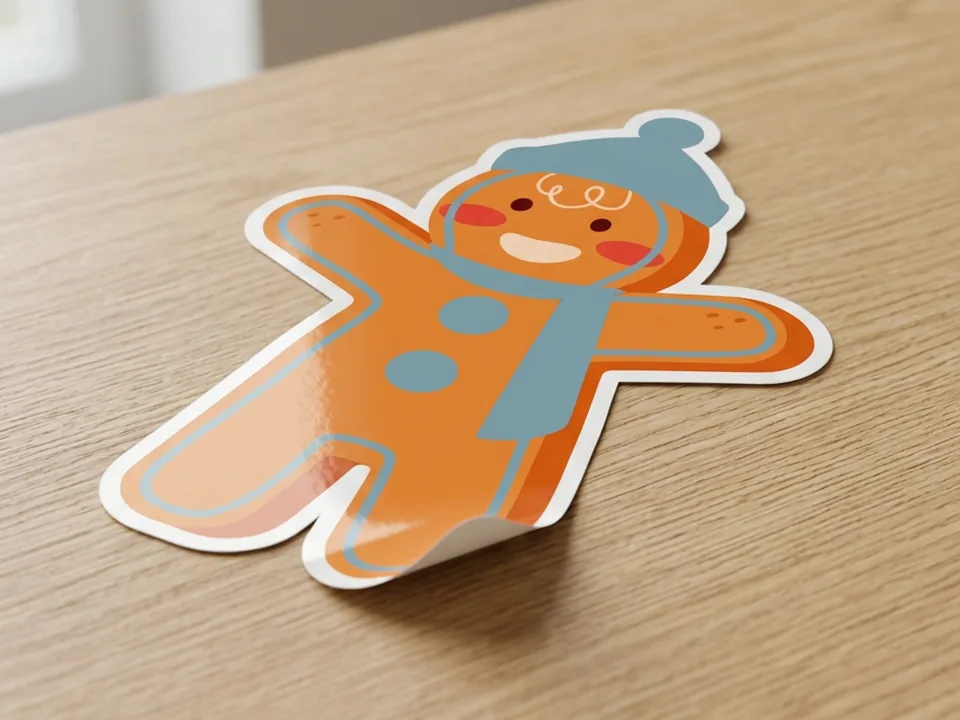
Cut through the backing along the contour — individual stickers in your shape. The classic.
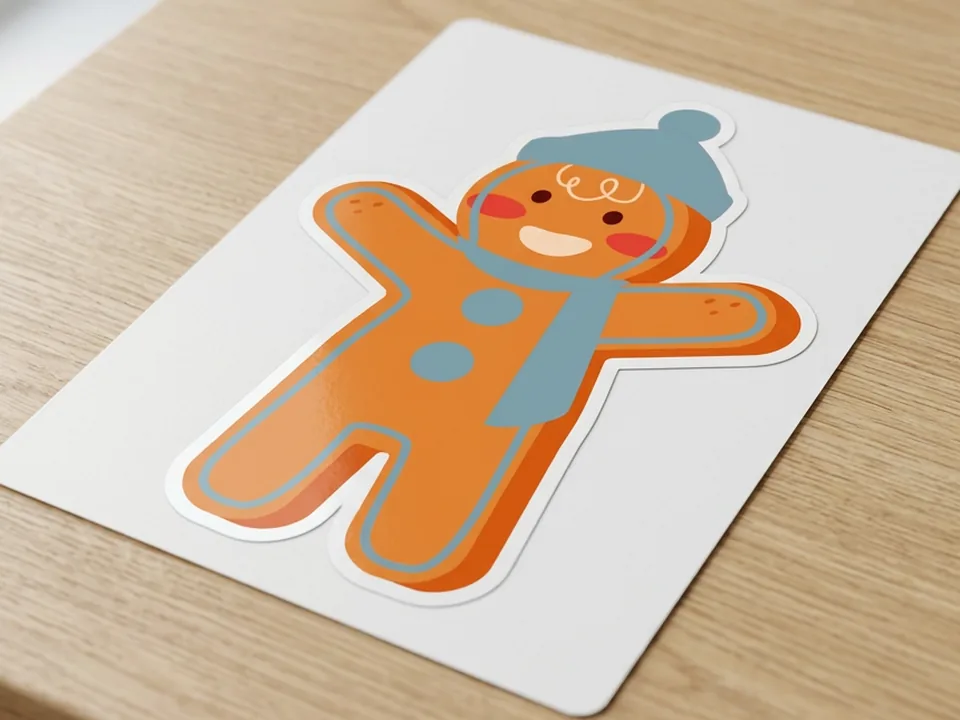
Only the vinyl is cut, the backing stays — easy to peel, great for handing out.
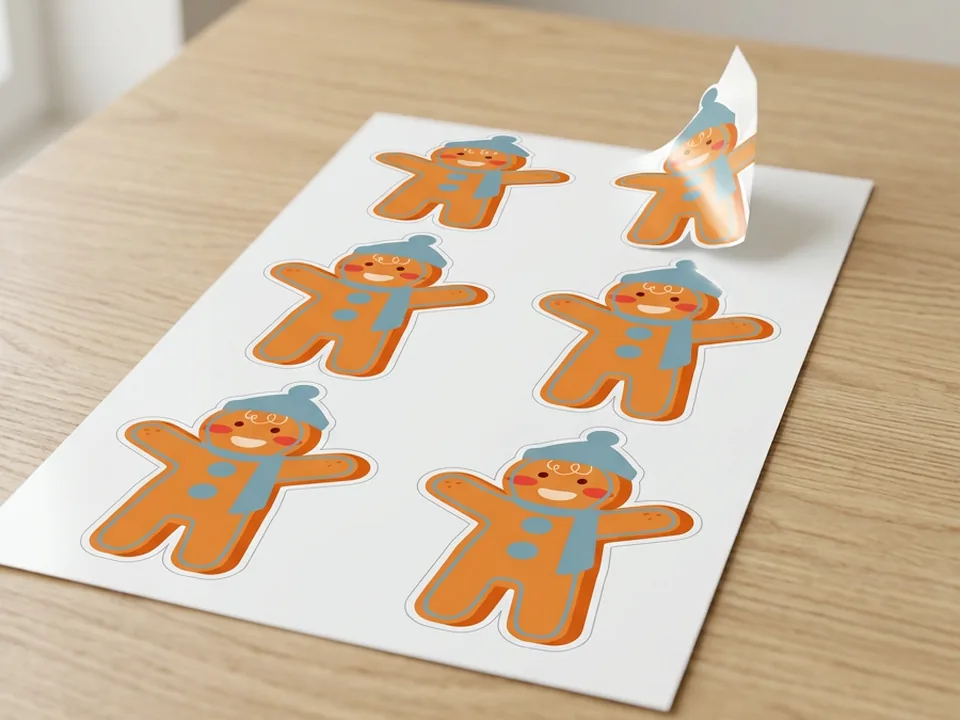
Several stickers on one sheet (e.g. 6 / 12 / 15 pcs). Cheaper per piece, handy for bulk.
Preparing your print file
We accept PDF, AI, EPS, CDR, SVG and PNG/JPG files.
Prepare raster images in high resolution, at actual size, with bleed on the edges.
Convert text to outlines/vectors — this avoids font substitution when we prepare the file for print.
For custom-shaped stickers (die-cut), we cut along the edge of your artwork — you don't need to draw a separate cut line.
We check every file before printing and send you a proof for approval.
Zobacz krok po kroku, jak przygotować plik do druku →
ORAJET 3164 film data — according to the manufacturer's technical data sheet (Orafol, orafol.com). Oracal 352 film data (gold/silver) — according to the supplier's technical data sheet (Lambda, sklep.lambda.pl).